
Essential Digital Resources for Small Business Owners
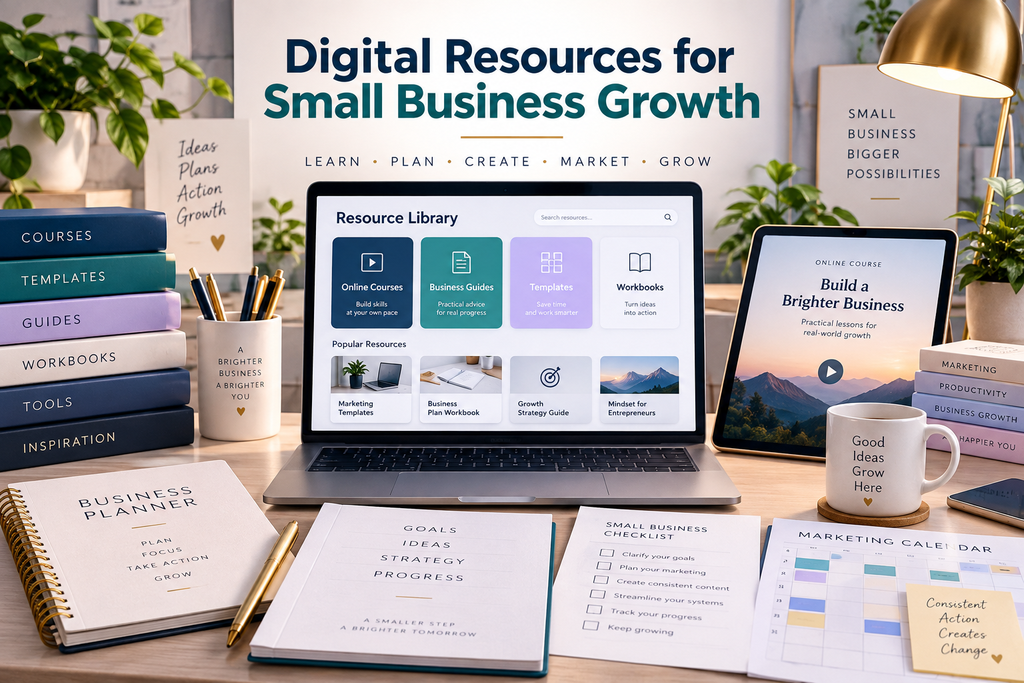
Essential Digital Resources for Small Business Growth
Running a small business requires more than having a great idea. Business owners must plan projects, manage finances, market their services, communicate with customers, create content, and make important decisions—often without a large team.
Choosing the right digital resources for small business can simplify daily operations and provide a clearer path toward growth.
The right digital resources for small business can make these responsibilities easier. Practical templates, guides, courses, workbooks, checklists, and organizational tools can help entrepreneurs save time, develop useful skills, and establish better systems for running their businesses.
Whether you are starting a new business, developing a side hustle, or improving an existing operation, digital resources can provide structure and guidance at every stage.
How Digital Resources for Small Business Support Growth
Small-business owners frequently manage several roles at the same time. One day may involve answering customer questions, preparing social media content, reviewing expenses, planning a new product, and organizing future projects.
Without a clear system, important tasks can easily become overwhelming.
Digital resources help transform complicated responsibilities into organized, manageable steps. Instead of beginning every task with a blank page, business owners can use structured materials created to guide their work.
Useful resources can help you:
- Organize business ideas
- Establish realistic goals
- Plan projects and deadlines
- Develop marketing strategies
- Prepare social media content
- Track income and expenses
- Improve customer communication
- Learn practical business skills
- Save time on repetitive tasks
- Make more informed decisions
A resource does not need to be complicated to be valuable. A thoughtfully designed checklist, planner, or template can sometimes solve a problem more quickly than an expensive or overly complex system.
Business Planning Resources
Every business needs direction. Planning resources can help entrepreneurs define what they want to accomplish and identify the actions necessary to reach their goals.
Business planners, strategy workbooks, goal-setting templates, and startup checklists can help organize important information in one place.
They may help business owners examine:
- Their business idea
- Target customers
- Products or services
- Pricing
- Startup expenses
- Revenue goals
- Competitors
- Marketing channels
- Short-term priorities
- Long-term plans
A written plan does not guarantee success, but it creates a foundation for making clearer decisions and measuring progress.
These digital resources for small business planning help entrepreneurs transform ideas into organized and measurable actions.
Project Management Tools
Small businesses regularly manage projects, even when they do not formally call them projects. Launching a product, creating a website, organizing an event, preparing a marketing campaign, or developing a course all involve objectives, tasks, deadlines, and resources.
Project management templates can help divide a large goal into smaller, achievable steps.
Useful project resources may include:
- Project-planning worksheets
- Task trackers
- Priority lists
- Content calendars
- Budget templates
- Risk assessments
- Weekly planning pages
- Progress reports
- Launch checklists
These tools help business owners understand what needs to be completed, who is responsible, and when each task should be finished.
Marketing and Social Media Resources
Marketing allows customers to discover a business and understand the value it offers. However, creating consistent marketing content can become time-consuming.
Digital marketing resources can help small-business owners develop a more organized approach to promotion.
These resources may include:
- Marketing-plan templates
- Customer profile worksheets
- Social media calendars
- Content-planning guides
- Caption prompts
- Email templates
- Brand checklists
- Promotional campaign planners
- SEO guides
- Advertising worksheets
The goal is not to publish content everywhere. A good marketing system helps a business select appropriate channels, communicate clearly, and create content that supports specific objectives.
Practical digital resources for small business marketing can make content creation more consistent and less time-consuming.
Sales and Customer Communication
Generating interest is only part of the process. Business owners must also explain their offers, respond to objections, follow up with potential customers, and build trust.
Sales guides, negotiation workbooks, email templates, and customer-service checklists can make these conversations more effective.
They can help entrepreneurs:
- Present an offer clearly
- Identify customer needs
- Explain benefits
- Prepare for sales conversations
- Respond professionally to questions
- Follow up with potential customers
- Handle common objections
- Create a better customer experience
Effective selling is not about pressuring people. It is about understanding a problem and clearly demonstrating how a product or service can help solve it.
Financial Organization Resources
Financial organization is essential for every business. Even a small operation needs a reliable way to track money coming in and going out.
Budget templates, expense trackers, pricing worksheets, and sales records can help owners understand their financial situation.
The U.S. Small Business Administration also provides information about managing business finances, marketing, employees, compliance, cybersecurity, and other operational responsibilities.
Digital financial resources can support everyday organization, but they do not replace advice from a qualified accountant, tax professional, or financial adviser when professional assistance is necessary.
Learning Resources for Developing New Skills
The digital world changes quickly. Entrepreneurs often need to learn new tools and skills while continuing to operate their businesses.
Self-guided courses, ebooks, educational workbooks, and practical learning kits make it possible to study according to an individual schedule.
Learning topics may include:
- Entrepreneurship
- Marketing
- Sales and negotiation
- Project management
- Web development
- Content creation
- Artificial intelligence
- Finance and business organization
- Digital tools
- Professional development
Resources that include exercises and projects can be especially useful because they encourage learners to apply information instead of simply reading about it.
Templates That Save Time
Templates provide a reusable starting point for common business activities. They can reduce the time spent creating documents and systems from the beginning.
A business owner might use templates to prepare:
- Business plans
- Marketing calendars
- Customer profiles
- Project schedules
- Email campaigns
- Social media posts
- Product launches
- Budgets
- Checklists
- Standard operating procedures
Templates should be adapted to the needs of each business. Their purpose is to provide structure while allowing users to personalize the information.
How to Choose the Right Digital Resources
Not every resource will be suitable for every business. Before downloading or purchasing one, consider the specific problem you want to solve.
Ask yourself:
- What task am I trying to complete?
- What result do I need?
- Is the resource appropriate for my experience level?
- Can I customize it for my business?
- Does it provide clear instructions?
- Will I realistically use it?
- Is it available in the language or format I need?
Choose resources that are practical, understandable, and connected to a current business goal. A smaller number of useful tools is more valuable than a large collection that is never used.
Build a Practical Business Resource Library
A personal resource library allows business owners to keep their most useful materials organized and accessible.
Your library might contain separate folders for:
- Business planning
- Marketing
- Sales
- Projects
- Finance
- Customer service
- Learning
- Content creation
Review these materials regularly and remove anything that is outdated or no longer relevant. As your business develops, your resource library should evolve with it.
By selecting useful digital resources for small business development, entrepreneurs can build stronger systems and continue learning as their needs evolve.
Explore Adarisi Academy
Adarisi Academy provides a growing library of practical courses, guides, workbooks, templates, learning kits, and digital tools for small-business owners, entrepreneurs, creators, and independent learners.
The Academy is designed to help members learn useful skills, organize their ideas, complete meaningful projects, and create new opportunities.
Selected resources are available in English, Spanish, or both languages. New learning materials and business resources are added regularly as the Academy continues to grow.
One Membership, A Growing Library of Resources
For $9.99 per month, Adarisi Academy members can access an expanding selection of Academy resources. Certain additional Adarisi Academy products may be offered to members with a 70% discount.
Membership benefits apply exclusively to products published by Adarisi Academy. Products sold by independent vendors in the Adarisi marketplace are not included unless clearly stated.
Start Learning, Creating, and Growing
Building a business takes time, knowledge, organization, and consistent action. Practical digital resources can help make that process more manageable.
Explore the growing collection at Adarisi Academy and find courses, templates, workbooks, guides, and tools created to support your next step.